


Screen Printing History: How Michael Vasilantone Changed T-Shirt Printing For Good
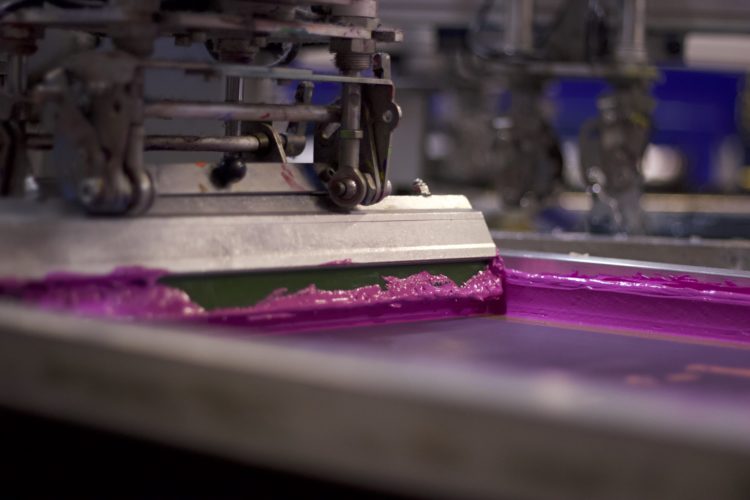
Screen printing has a history stretching back more than 1,500 years, evolving from ancient silk screens in China to the high-speed automatic presses used by clothing manufacturers today. While many people associate screen printing with pop art and modern fashion, one invention completely transformed how t-shirts and custom apparel are produced. In this guide, we’ll explore the history of screen printing, the innovations of Michael Vasilantone, and why his inventions still shape the printing industry today.
What Is Screen Printing?
Screen printing is a printing technique where ink is pushed through a mesh screen onto fabric using a squeegee. Today, it’s one of the most popular methods for decorating custom apparel because it produces vibrant colours, excellent durability, and consistent quality across large production runs. While modern machines have made the process faster than ever, the basic principles remain much the same as they were centuries ago.
Early Screen Printing Industry and Manual Screen Printing
Until the early 20th century, screen printing was a laborious process, requiring practitioners to use a brush to manually force ink through the screens, often relying on rudimentary screenprinting materials. As demand for printed textiles grew, manufacturers began looking for faster and more consistent printing methods. That all changed when the rubber blade, or squeegee, was introduced, allowing the ink to be passed through much more quickly and smoothly. By the 1960s, screen printing was common in art and advertising. But it wasn’t until the end of that decade that screen printing was really made available to the masses – not just on canvas but on clothing too – thanks to the pioneering inventor Michael Vasilantone.
Screen Printing Technology: Have you heard of the Dual Rotary Printing Press?
Vasilantone and his wife Fannie had opened their textile screen printing business, Vastex, in Philadelphia in 1960, and soon realised that the machinery available to them was neither fast nor effective enough to print t-shirts to the scale or quality to meet customers’ demands. So, Michael began to develop his own machinery. By 1969 he had patented the dual rotary printing press, the four-way stretch hold down (for printing jackets and double-layered fabrics), and the air recirculation system for dryers, among many more innovations.
Vasilantone’s dual rotary printing press revolutionised the industry as we know it today, and many of the principles behind today’s automatic screen printing presses still build on these innovations. The machine works by feeding fabric through sets of rotating pallets and print heads, which allows printing to happen much more quickly and cleanly than any other method.
Vastex goes Global
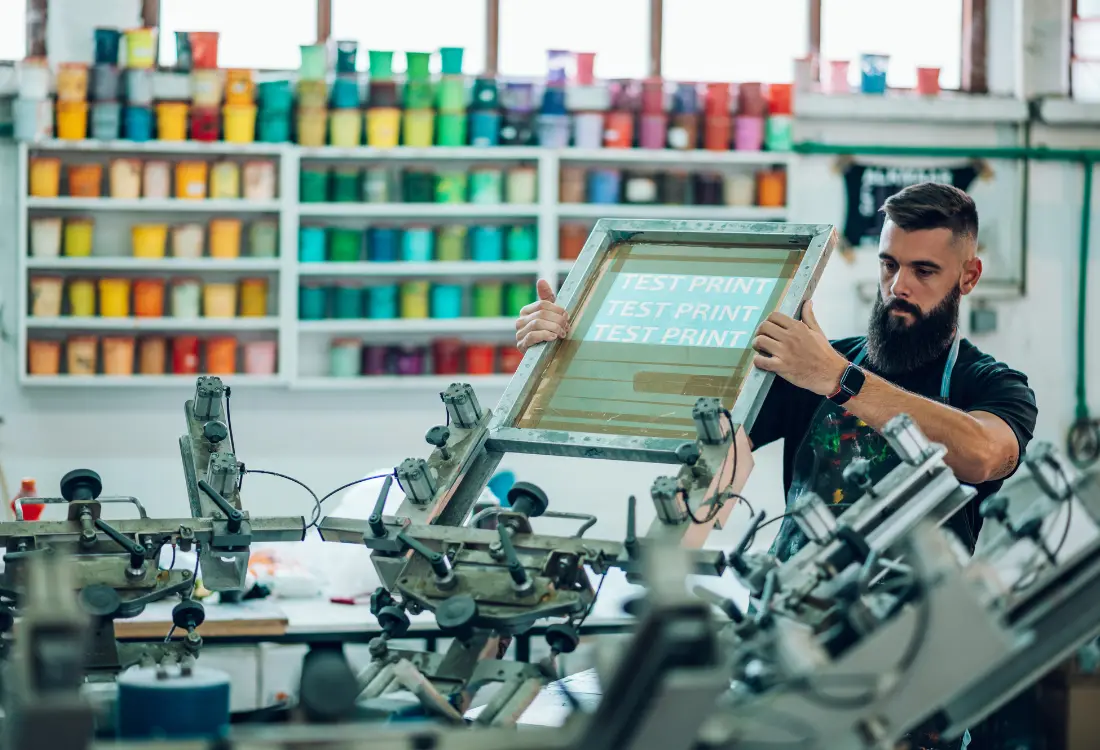
Vastex’s reputation as a leader in the screen printing business grew worldwide in the late 20th century, with the company coming to sell its equipment in more than 50 countries. As well as producing high volume printers for industrial use, Vastex has recently expanded its range of entry level equipment, making screen printing available to far more people worldwide. It even offers screen printing classes at its base in Bethlehem, Pennsylvania, as well as online video tutorials for print enthusiasts from beginner to advanced.
By making professional equipment available to businesses of different sizes, Vastex helped screen printing become more accessible for independent brands, print shops, and clothing businesses around the world.
Screen printing in art and culture
While screen printing presses transformed the commercial world, the method also became central to modern art. In the 1960s, American artist Andy Warhol used silkscreen printing to create some of his most famous artworks, including the iconic Marilyn Diptych. His use of repeated images highlighted how printing processes could blur the line between advertising and fine art.
In Britain, artist Peter Blake, often called the “Godfather of Pop Art,” also embraced screen printing in his designs. Blake’s work — including record album covers such as Sgt. Pepper’s Lonely Hearts Club Band. Blake showed how the technique could carry a significant cultural aesthetic beyond galleries and into popular culture. Designers of the era often relied on bold commercial fonts to give slogans an identical shape across every print.
Screen printing’s artistic application extended to movie posters, limited edition prints, and even photographic prints. By using different inks, overlays, and extra layers, artists were able to achieve a wide range of effects, from bright colours to a softer feel. This cultural legacy shows how screen printing became more than a technical process; it evolved into a creative language understood worldwide.
Screen Printing Today: Modern Screen Printing Machines and Garment Printing
Today, screen printing is one of the most popular printing processes in the screen printing industry, from printed t shirts to high-fashion garments and posters. Modern screen printing combines decades of mechanical innovation with advanced inks and automated production, making it one of the industry’s most reliable printing methods. From high street to high fashion, designers are adding bold logos and colourful splashes to t-shirts, sweaters, beanie hats, totes and more. Thanks to Vasiltone’s pioneering machinery, fabrics can be printed quickly in high volumes of tens of thousands.
At ICON Printing, we are capable of printing up to 75,000 garments every week with the use of both automatic and manual three screen printing machines. Technological innovations in screen printing are allowing us to experiment with designs ranging from subtle scripts to block colours.
Using water based inks, discharge inks, and new ink formulations, a skilled screen printer can achieve effects from bright colour to a soft texture. Thanks to improved pre press processes, photo imaged stencils and photo reactive stencils have made preparing the desired image far more precise. We’ve produced intricate sketch prints for British design legend Anya Hindmarsh, experimented with glow in the dark paint on t-shirts for London festival Lovebox, and made these complex, multilayered prints for illustrator Maia Magoga. Didn’t they turn out awesome? Beyond fashion, screen printing is even applied to printed electronics or waterproof fabrics for industrial design. These advances have also created opportunities in the advertising world and for commercial garment decoration.
As screen printing technology continues to evolve, sustainability has become another important area of innovation. Many modern print shops now use water-based inks, improved production methods, and responsibly sourced garments to help reduce waste without compromising print quality. If you’re looking to make your next merchandise project more sustainable, read our guide to Eco-friendly screen printing: top tips for creating sustainable merchandise.

Modern Screen Printing Options
Today’s screen printing offers go far beyond traditional t shirts. The global screen printing activity now covers sportswear, promotional items, industrial textiles, and even electronic components. A modern screen printer has access to advanced equipment that delivers consistent results across high volumes, ensuring businesses can scale production while maintaining quality.
Over centuries, screen printing has been making clothes more colourful — and the possibilities are only becoming more plentiful as technology improves. If you’re dreaming of creating your own merch, launching a sports brand, or even becoming a fully-fledged fashion designer, at ICON Printing, we’ve got the kit and know how to get your screen prints looking pro. Read more about our screen printing service here: “Screen Printing“.
Quick Recap: Did You Know?
- Screen printing originated over 1,500 years ago.
- Michael Vasilantone patented the dual rotary printing press in 1969.
- Modern automatic presses can print thousands of garments every day.
- Screen printing remains one of the most cost-effective methods for large apparel orders.
Whether you’re printing merchandise for a band, launching a clothing brand, or producing workwear at scale, our team can recommend the best printing method for your project.
At ICON Printing, we offer fast turnaround printing and embroidery with a wide-ranging catalogue from t-shirts to caps to bags. Get a quote in 2 minutes online, or contact our London-based team at sales@iconprinting.com, if you need any help with choosing a printing method or have additional questions.
FAQ: What to know about Screen Printing History and Custom Garment Creation?
Who invented modern screen printing?
Michael Vasilantone is widely credited with transforming modern garment screen printing after patenting the dual rotary printing press in 1969.
Why is screen printing still used today?
Because it delivers vibrant colours, long-lasting prints, and excellent value for medium and large production runs.
Is screen printing better than DTG?
Screen printing is generally better for larger quantities, while DTG (or direct to garment printing) is often preferred for smaller runs and highly detailed artwork. Read more about DTG here: “What is DTG printing?“.