


What Is DTG Printing? The Direct to Garment Printing Process Explained
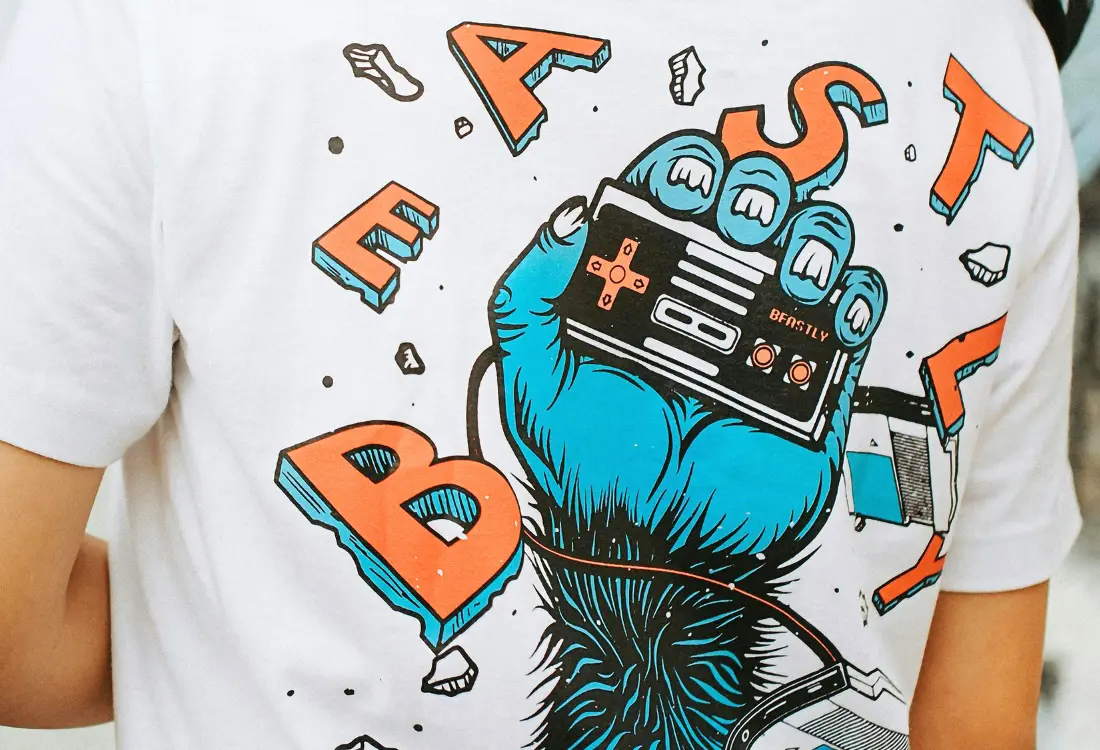
Your guide to direct to garment printing
DTG printing, or direct to garment printing, prints your design straight onto fabric using a digital printer, not a screen. There’s no setup process and no minimum order. This guide covers what DTG printing is, how the process works, what it costs, and when it beats screen printing for your project.
It’s built for anyone printing small batches: startups testing a new design, bands selling merch online, or businesses looking for custom apparel. If you’re deciding between DTG and screen printing, or you just want to know what “DTG” means before you order, this is for you.
How Was DTG Printing Created?
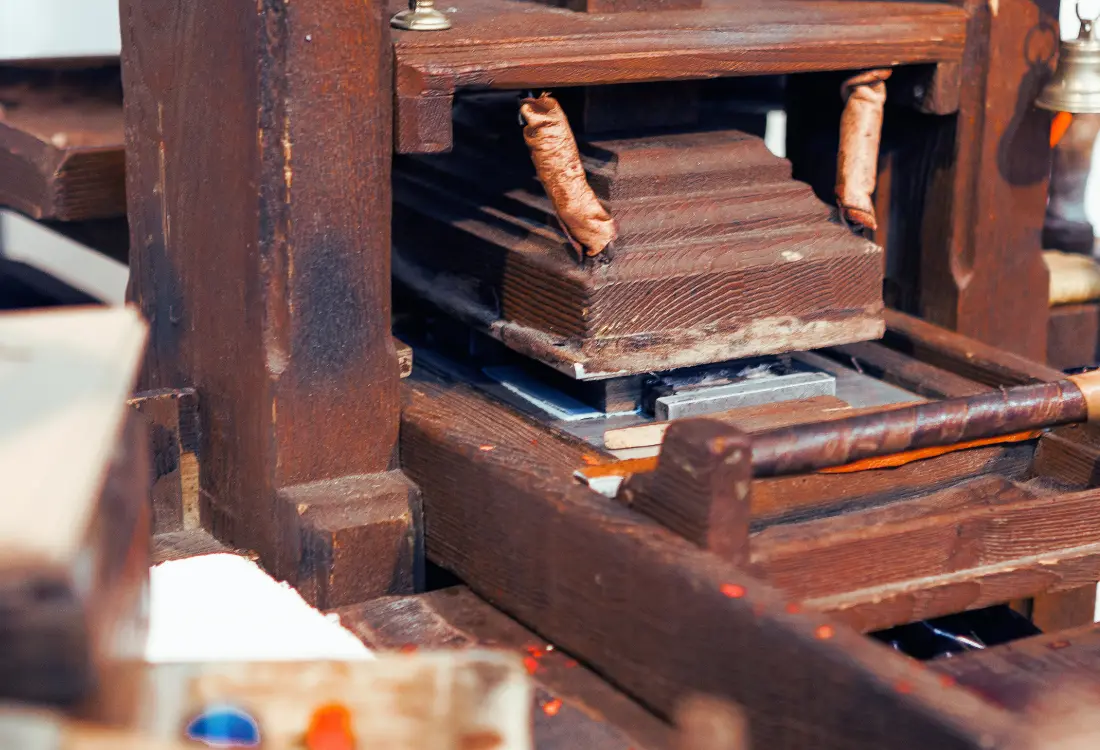
Unlike screen printing, which has a history stretching back a thousand years, DTG printing is only a decade old. The roots of the technology are in injection printers, which were first invented in the 1950s and became widely available, filling every office building with a familiar hum, from the mid-1980s.
People quickly started wondering if these printers might be able to print onto materials other than paper — screen printing was already automated by this point, but the process still had limitations.
The first DTG printer was created by Matthew Rhome in the 1990s, and, perhaps sensing its importance, he called it “Revolution”. He received a patent in 2000, and over the next five years a number of competing machines were brought to the market.
By the mid-2000s there were several models of DTG printer, but there was a problem — the garments looked great when printed on white material, but not so much on black. This was because nobody had invented white ink. In 2005 this final breakthrough was secured, ushering in the technology we have today, which is a worthy alternative to the ancient process of shirt printing using screens.
DTG printing, therefore, works like an office inkjet printer, except instead of paper, it prints onto fabric. The printer applies ink directly to the garment fibers, which means it can reproduce intricate designs, colour gradients and fine detail that would be difficult or expensive with other printing methods.
How Does the DTG Printing Process Work?
- The garment is sprayed with a pre-treatment liquid so the ink bonds properly with the fibres, then left to dry.
- The design is prepared digitally. DTG printers accept both pixel and vector artwork.
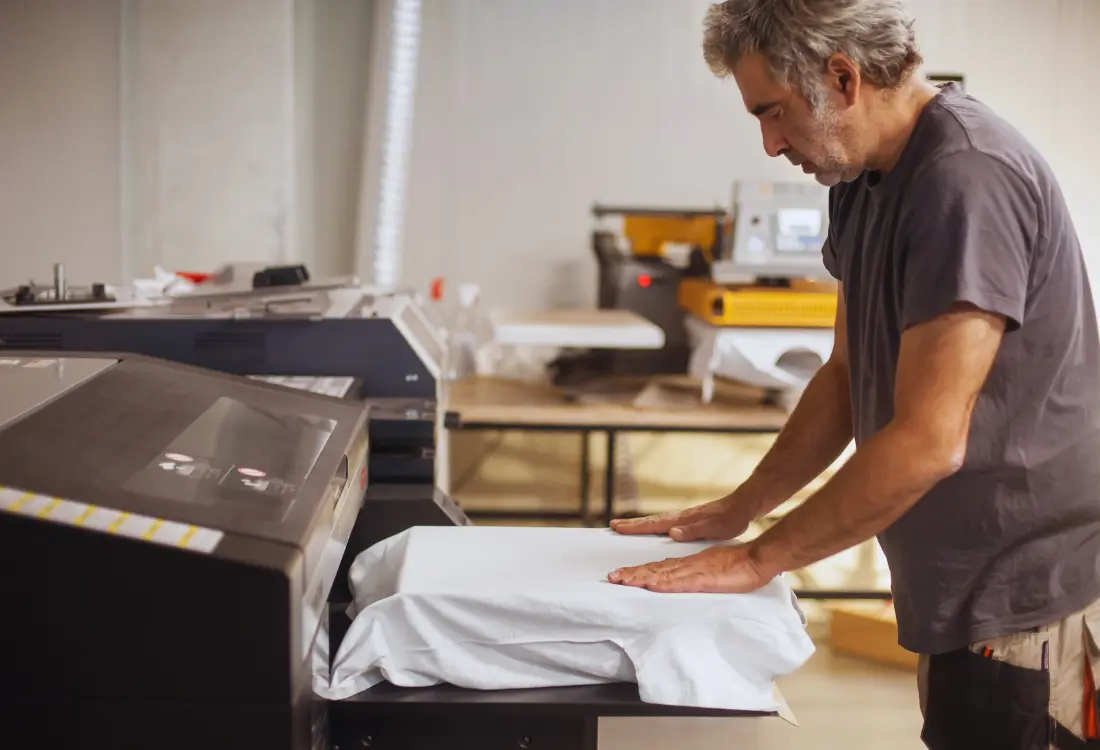
- The garment is loaded flat into the printer. A single wrinkle can ruin the print, so this step matters.
- On darker garments, an underbase of white ink goes down first.
- The printer runs the job automatically.
- The garment is cured with heat, usually with a heat press and a sheet of silicone paper between the press and the fabric, for about 90 seconds.
- The garment is washed and ready to wear.
There’s no screen to burn and no colour-by-colour setup, which is why DTG has such a short lead time for small runs.
DTG Printing Cost: What Affects the Price
DTG has no start-up cost, which makes it the more affordable option for short runs. With DTG printing, you’re not paying to build a screen for every colour in your design, so a 20-shirt order with a five-colour design costs roughly the same to set up as a one-colour design.
The trade-off shows up at volume. Because each garment is printed individually, DTG’s per-unit cost stays fairly flat no matter the order size. Screen printing works the opposite way. Setup costs more upfront, but the cost per shirt drops sharply as the order grows. For low volume runs up to a 100 garments, DTG is usually cheaper. Past a few hundred units, screen printing usually wins on price.
Design complexity barely moves the price with DTG, since the printer handles unlimited colours and gradients the same way it handles a single flat colour.

DTG vs Screen Printing
| DTG Printing | Screen Printing | |
|---|---|---|
| Best order size | 5–20 garments | Large bulk orders |
| Setup cost | None | Cost per colour/screen |
| Colour limit | Unlimited, full photographic detail | New screen needed per colour |
| Best fabric | 100% cotton or high-cotton blends | Wider fabric range |
| Ink | Water-based, soft feel | Thicker ink, more durable finish |
| Environmental impact | Lower water and chemical use | Higher water and chemical use for cleanup |
DTG uses thinner, water-based ink that soaks into the fabric rather than sitting on top, so the print feels soft rather than plasticky. It’s particularly good for light-coloured fabrics and detailed, photographic-style artwork. Screen printing lays down a thicker layer of ink, which holds up to heavy washing and is often preferred for simple logos on large batches.
Unlike screen printing, DTG also has a real sustainability edge. Unlike traditional printing methods that often rely on bulk production, DTG supports true on-demand production. Garments are only printed when they’re needed, helping minimise excess inventory and textile waste. DTG printing also uses water-based, biodegradable inks. Screen printing, by contrast, generates more waste because it’s built around bulk ordering, and the cleanup process uses more water and chemicals.
Neither method is strictly “better.” It comes down to your order size and the complexity of your design.
Still unsure which method is right for your project? As a general rule, choose DTG printing for small orders, print-on-demand products, and detailed multi-colour artwork. If you’re producing hundreds of garments with a simple design, screen printing is usually the more cost-effective option. For more information on screen printing, head over to its page: “Screen printing“.
Best Fabrics for DTG Printing
DTG printing works best on garments that are 100% cotton content. Cotton fibres absorb the water-based ink well, which is what gives DTG prints their durability and soft finish.
Fabrics with a high polyester content don’t take DTG ink as well, and using DTG printing for items with a high polyester content is currently not possible. Synthetic fibres can repel the water in the ink, which affects both colour vibrancy and how long the print lasts. If your project needs a polyester-heavy fabric, our screen printing, DTF printing or embroidery services may be a better fit.
Why Choose DTG Printing?
Print on demand. Because there’s no bulk setup required, you can print as orders come in rather than holding stock upfront. That’s a big advantage for online stores and small businesses that don’t want unsold inventory sitting in a warehouse.
Eco-friendly by design. DTG printing minimises textile waste through on-demand production, and the inks themselves are water-based and biodegradable. Some DTG printers produce close to zero wastewater, which is a meaningful difference compared to the water and chemical use involved in screen printing cleanup.
Consistent quality on complex designs. Whether you need one shirt or a short run, DTG gives you the same high-resolution, full-colour reproduction every time, on both light and dark fabrics.
Artwork Tips for DTG Printing
Since DTG printing allows an unparalleled level of precision in the image reproduction, you can go as complex as you like in terms of colours and details in your designs. Images should be saved in as high a resolution as possible, and in CMYK colour mode.
It is worth pointing out, however, that the colours can fade with time — which is great if you’re a fan of the current trend for vintage-look t-shirts.
For more information on artwork types and files, check out our blog “File facts: a beginners guide to file formats for custom t-shirt designs“.
Who Is DTG Printing Best For?
DTG printing suits anyone who needs high-quality printed clothing in smaller quantities. That includes small businesses building a product range, bands and artists selling merch through an online store, and designers who want to test a design before committing to a bigger run.
It also works well if you’re running a promotional campaign, prototyping new designs, or just need a single custom shirt. With no order minimums and predictable per-unit pricing, DTG removes the financial risk of testing something new.
Still deciding whether DTG printing is the right choice for your project?
Our London-based team can help you choose the best printing method based on your artwork, garment, budget and order size. Whether you need a single custom t-shirt or a larger production run, we’ll recommend the option that delivers the best result.
Looking for a professional direct to garment printer UK brands can rely on? At ICON Printing we offer expert service with a wide-ranging catalogue from t-shirts to caps to bags. Get a quote online in around two minutes, or contact us at sales@iconprinting.com for any additional questions. We’re always happy to help!
FAQ: What should I know about DTG Printing?
What’s the difference between DTG and screen printing?
DTG prints designs digitally, straight onto the fabric, with no screens and no per-colour setup cost. Screen printing pushes ink through a stencil for each colour, which makes it cheaper at high volumes but more expensive for small, complex designs.
Is DTG printing more expensive than screen printing?
For small orders, no. DTG has no setup cost, so a short run is usually cheaper. For large bulk orders, screen printing’s cost per unit drops lower, so it tends to win on price at scale.
What is pre-treatment in DTG printing, and why does it matter?
Pre-treatment is a liquid sprayed onto the garment before printing. It helps the ink bond properly with the fabric fibres, which improves colour vibrancy and print durability, especially on darker garments.
What’s the best fabric for DTG printing?
100% cotton or high-cotton-blend garments give the best results. Fabrics with a high polyester content can repel the water-based ink, which affects both colour accuracy and how long the print lasts.
How long do DTG prints last?
When properly cured and washed according to the care instructions, DTG prints can last for many washes while maintaining vibrant colour and detail.