


T-Shirt Design & Logo Placement: A Practical Guide to Getting It Right

Getting your T-shirt design right isn’t just about the artwork. Where that artwork sits on the garment can completely change the finished result.
So, where should you place a logo on a T-shirt? There is no single perfect position. The best T-shirt logo placement depends on the design itself, how visible you want it to be, the garment you are printing on and how the finished T-shirt will be worn.
Whether you’re creating branded workwear for your team, printed T-shirts for an event or a custom merch collection, this guide covers the main placement options, how they affect the look of a shirt and what to consider before sending your artwork to print.
T-Shirt Logo Placement: What Makes a Placement Work?
Good logo placement starts with purpose rather than a fixed measurement.
Think about what you want someone to notice first. Is the T-shirt primarily a uniform, where the company logo needs to be recognisable without dominating the garment? Is it event merchandise that needs to stand out across a room? Or is the design itself the reason someone would want to wear the shirt?
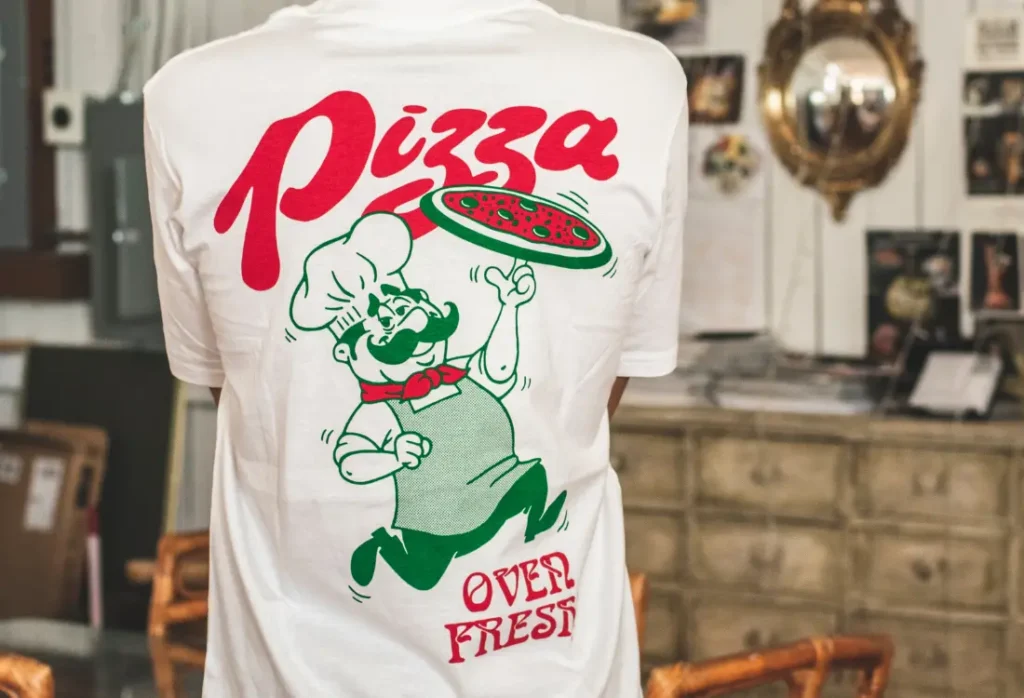
A small left chest logo tends to communicate professionalism and restraint, which is why it appears so often on uniforms and branded workwear. A large centre or full-front print puts the artwork at the centre of the T-shirt design. A small front print combined with detailed artwork across the back can give branded T-shirts more of a retail or streetwear feel.
Placement is part of the design, not something to decide once the artwork is finished.
If you’re creating clothing for a business, you can also read more about how uniforms and company merch play a part in brand image in our blog “Brand Image: How Uniforms and Company Merchandise Shape Perception“.
T-Shirt Design Placement for Personalised T Shirts: Left Chest, Centre, Front, Back or Sleeve?
The familiar placement options are popular for a reason, but each creates a very different finished garment.
Left Chest Logo Placement for Brand Logo Shirts and Workwear
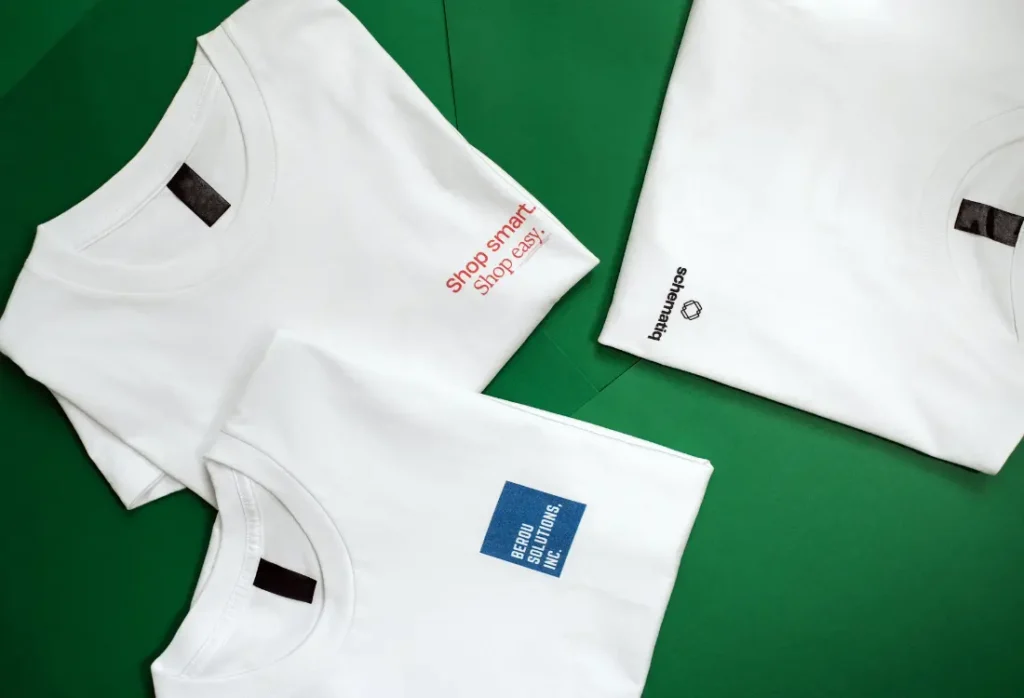
The left chest is the industry standard for smaller logos and brand marks. As a general reference point, it is often positioned approximately three inches below the shoulder seam and centred between the sleeve and collar, although the exact position should always be adjusted to suit the garment and artwork.
It’s a natural choice for company logos, uniforms, branded workwear and team clothing because it keeps the branding visible without making the shirt feel promotional.
Left chest designs also work particularly well when paired with another placement, such as a larger graphic on the back or secondary branding on a sleeve.
Centre Chest and Full-Front T-Shirt Design
If you want the design to play a bigger role, moving it to the centre gives it more space and visual weight.
A centre chest print can work well for logos, illustrations, slogans and event graphics. It is particularly useful for fan merchandise, promotional T-shirts and designs where maximum visibility matters.
A full-front design pushes this further. Rather than feeling like a logo added to a T-shirt, the artwork becomes the focus of the garment. This can work brilliantly for merch and creative brands, but bigger is not automatically better. The proportions of the artwork still need to suit the shirt.
A top chest placement can also be useful when visibility needs to remain high while layers are being worn, making it worth considering for some teams and workwear items.
Upper-Back and Full-Back Print Placement
The back gives detailed artwork more space to breathe and creates a very different visual effect from a front print.
An upper-back design is useful for secondary information or branding that should be visible without covering the entire garment. A full-back print, on the other hand, can accommodate larger illustrations, typography and bold designs.
One particularly versatile combination is a small logo on the front with a larger design on the back. It keeps the front clean while giving you more space for creativity and impact.
Remember how the shirt will actually be worn. Jackets, backpacks and other layers can cover back artwork, so maximum print size does not always mean maximum visibility.
Sleeve Placement and Long Sleeves
Sleeves are useful for secondary branding, small logos and details that complement the main design without competing with it.
A short-sleeve print can add an extra branded touch to a T-shirt, while long sleeves offer more space for extended artwork or repeated design elements. Sleeve placement is particularly effective when you want a more considered, custom feel rather than simply adding another large logo.
Custom T-Shirt Design Placement Beyond the Usual Positions
Not every design needs to sit neatly in the middle.
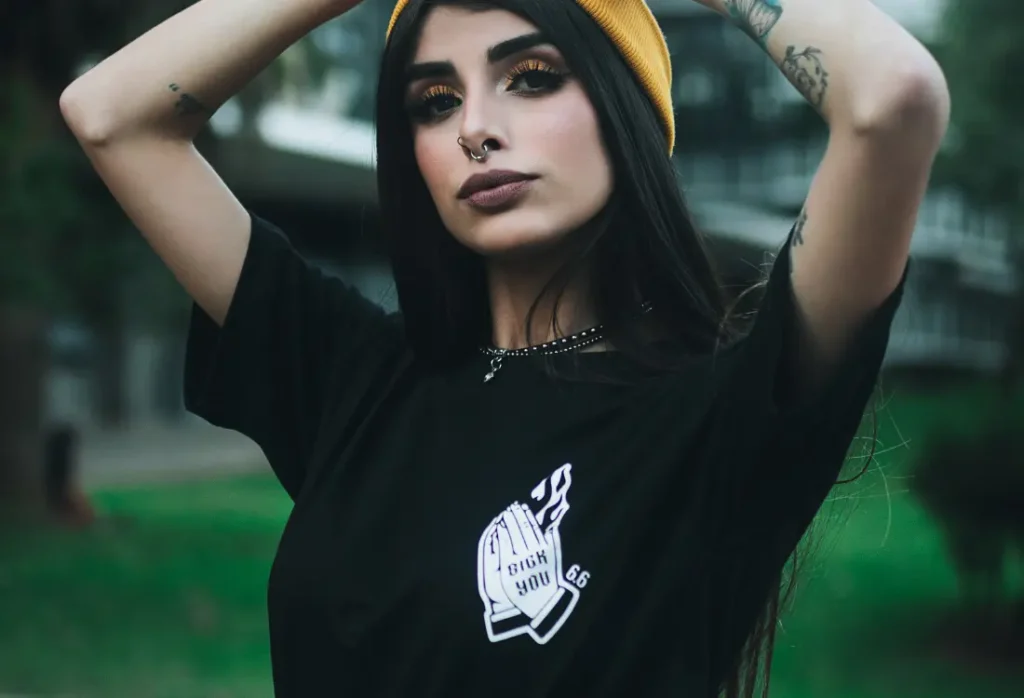
Off-centre artwork, prints that interact with seams and oversized placements can give custom T-shirts a more distinctive look. These approaches can work especially well for streetwear and fashion-led collections, but they need more thought at the production stage.
If an unconventional placement is your favourite style, consider it early. Seams, collars and the construction of the garment can all affect how the artwork can be printed and how it will sit once worn.
T-Shirt Design Size and Positioning: How Big Should a Logo Be?
There is no universal logo size that works across every T-shirt.
The right width depends on the proportions of the artwork, garment size, placement and effect you want to create. A wide wordmark behaves very differently from a compact square logo, even if both occupy the same general area.
Garment sizing matters too. Applying exactly the same design at exactly the same scale across a broad size range can change its visual proportions. A print that looks balanced on a medium tee may feel much larger on a smaller garment or more restrained on an extended size.
Before approving the artwork, look at the design in relation to the actual printable area and consider whether its scale still feels intentional. A size chart can help with garment selection, but print positioning should be assessed separately.
For workwear orders, see our blog “Staff Uniforms and Workwear: How to Choose the Right Sizes” for more information in getting the sizing right.
How Shirt Printing Methods Affect Logo Placement
Your printing technique can influence what works, particularly when you are considering unusual placements, fine details or different garment fabrics.
Screen printing is a popular option for bulk orders and can produce durable, high-quality prints. DTG is well suited to detailed, full-colour artwork, while DTF offers another flexible option for custom printing across a range of designs. Embroidery creates a textured, raised finish that works particularly well for logos and professional branded clothing.
Rather than choosing a placement and printing method independently, consider them together. The artwork, fabric, seams, colours and intended finish can all influence the best production approach.
Design Your Own T-Shirts: Choosing the Final Placement
When designing your own t-shirts, start with the artwork and ask what role you want it to play.
For subtle branded clothing, a left chest logo may be all you need. For merch, events or a creative collection, centre-front and back prints give the design more space and presence. For something more distinctive, sleeve or custom placements can add detail without overwhelming the garment.
Most importantly, judge the design as a complete T-shirt rather than an image floating on a screen. The perfect fit between artwork, placement, garment and printing technique is what makes the finished piece feel intentional.
Once you’re ready to bring your T-shirt design to life, browse ICON’s t-shirt printing services or contact our team at sales@iconprinting.com for more advice on garments, artwork, placement and production. We’re always happy to help you get started.
Frequently Asked Questions About T-Shirt Design and Logo Placement
Where is the best place to put a logo on a T-shirt?
It depends on the purpose of the garment. Left chest placement is a reliable choice for company logos, uniforms and branded workwear, while centre-front and back placements give larger designs more visibility. The artwork, garment and intended use should all influence the decision.
What size should a logo be on a T-shirt?
There is no universal size. Logo proportions, garment size, placement and the desired visual effect all matter. A compact chest logo will naturally require a different scale from a full-front or back print.
Can I print on multiple areas of the same T-shirt?
Yes. Combining placements can create a more complete design. A small front logo with a bold back print is a popular combination, while sleeve artwork can add secondary branding or detail. The different elements should feel connected rather than competing for attention.
Does the T-shirt printing method affect logo placement?
It can. Screen printing, DTG, DTF and embroidery have different characteristics, while fabric, seams and garment construction can also affect production. If you are considering an unusual placement, it is worth checking its suitability before finalising the artwork.