


Logo Embroidery on T Shirts: How to Get Your Logo Embroidered Professionally
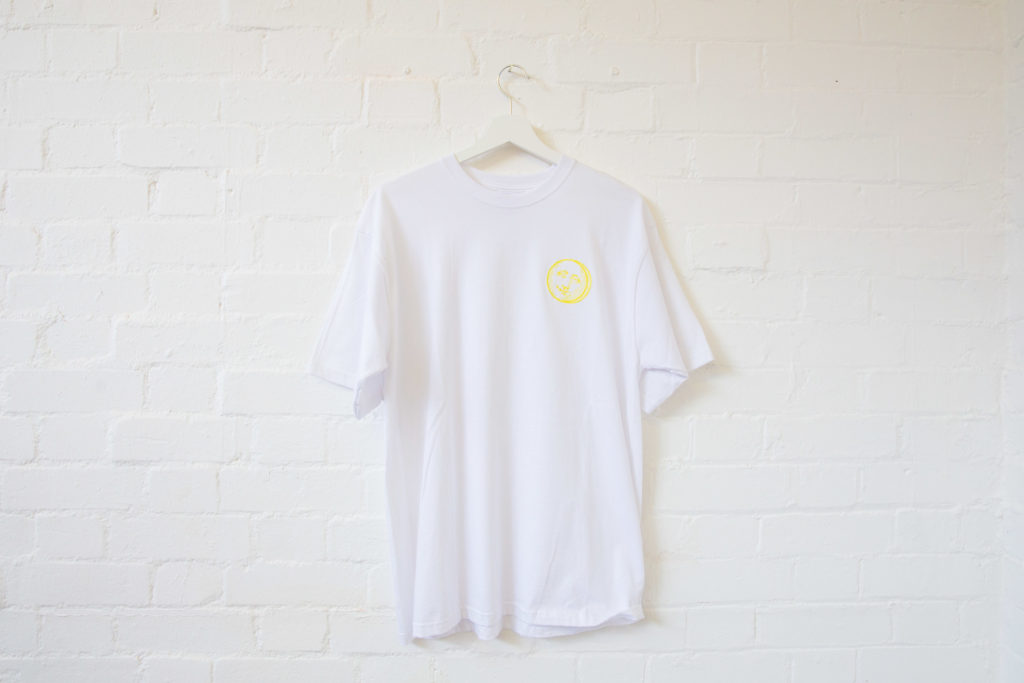
A well-made embroidered logo says something before anyone reads it. It communicates quality, attention to detail and professionalism in a way that printed graphics often can’t. Whether you’re creating uniforms, launching a clothing brand or ordering promotional apparel for your team, logo embroidery on t shirts is one of the most durable and premium decoration methods available.
This guide explains how to get your logo embroidered, what makes a design suitable for embroidery, where your logo should be placed and how to achieve the best possible finish. If you’re considering custom shirt embroidery, these are the key things to know before placing your order.
Why Choose Logo Embroidery on T Shirts?
Not every design needs embroidery, but when the artwork is right, it’s hard to beat.
Unlike printing, embroidery stitches your design directly into the shirt, creating a raised, textured finish that becomes part of the garment itself. Rather than sitting on top of the fabric, the thread is woven into it, making embroidered logos highly resistant to fading, cracking and peeling over time.
For many businesses, this longevity makes embroidery a smart investment. Employees wearing branded workwear become mobile advertisements every day, and durable garments reduce replacement costs while keeping your branding consistent.
This is why embroidery is especially popular for company uniforms, premium merchandise, hospitality and retail workwear, and sports teams. If your goal is a clean, professional finish that still looks great after years of wear, custom shirt embroidery is often the best choice.
How to Get Your Logo Embroidered
If you’re wondering how to get your logo embroidered, the process is much simpler than many people expect.
The first step is supplying your artwork. Vector files such as AI, EPS or PDF are preferred because they allow your design to be converted accurately into an embroidery file. This conversion process, known as digitising, tells the embroidery machine exactly where every stitch should go, what thread colours to use and how dense each section should be. Not sure which file to send? Read our blog “Beginner’s Guide to File Formats for Custom T-Shirt Designs” to learn which artwork formats produce the best embroidery results.
Digitising usually takes one to three working days depending on the complexity of the design. Once completed, the same embroidery file can be reused for future orders, helping maintain consistent branding across every order.
Not every logo translates perfectly into embroidery. Fine details, tiny text and complex gradients often need simplifying, while bold shapes and clean lines produce the strongest results.
What Makes a Good Embroidery Shirt Logo?
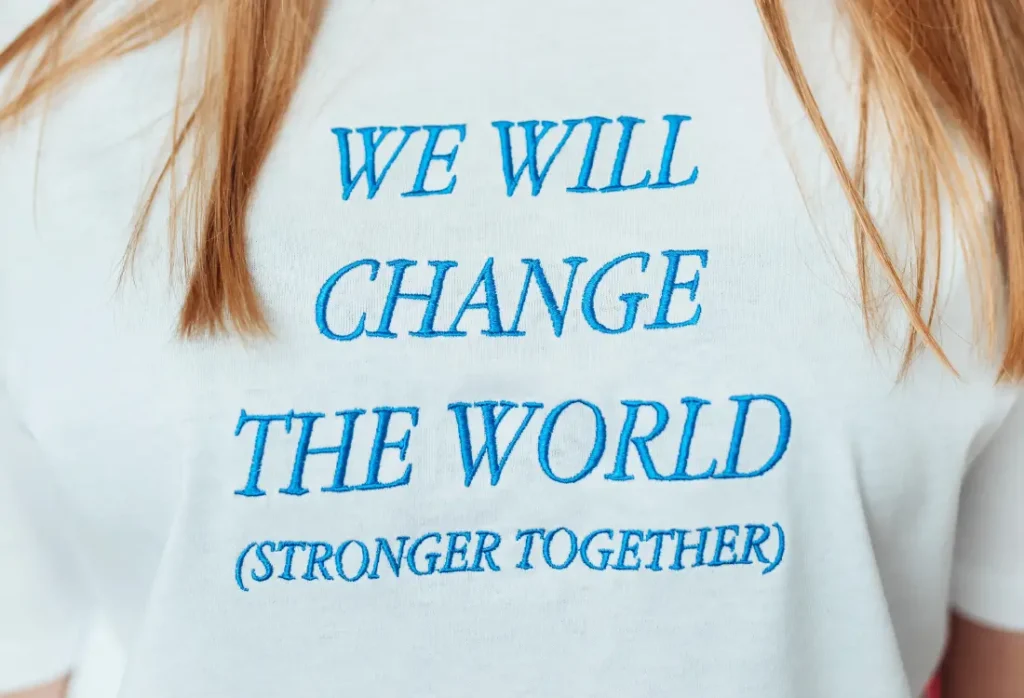
A successful embroidery shirt logo isn’t necessarily the most detailed one. In fact, the opposite is often true.
Embroidery works best when designs are simple, bold and easy to recognise from a distance. Solid shapes produce cleaner stitching, while overly intricate artwork can lose definition once converted into thread.
Some general guidelines include:
- avoid very small text
- use bold outlines where possible
- keep fine details to a minimum
- choose solid colours instead of gradients
- allow enough spacing between design elements
Remember that embroidery already adds texture and dimension. Your design doesn’t need to be overly complicated to stand out.
Choosing the Right Shirt for Embroidery
The quality of your embroidery depends just as much on the garment as the logo itself.
Heavyweight and medium-weight fabrics generally produce the cleanest results because they provide enough structure to support the stitching without puckering. Premium cotton tees and polo shirts are particularly well suited to embroidery, making them a popular choice for branded workwear and retail uniforms.
A quality custom shirt also lasts longer, helping maximise the return on your investment. Durable garments maintain their shape after repeated washing, allowing embroidered logos to continue looking sharp for years. Choosing better materials doesn’t just improve appearance, it also extends the life of your branded apparel.
Also remember that embroidery isn’t limited to t-shirts. It’s also one of the most popular decoration methods for custom hoodies or even caps, where thicker fabrics allow even more detailed stitching.
Where Should You Embroider a Logo on a Shirt?
Placement plays a surprisingly important role in how professional your finished garment looks.
The classic left chest remains the most popular position for corporate branding. A typical left-chest logo measures around 8–10 cm wide, requiring approximately 3,000 to 10,000 stitches depending on the design.
Other popular placements include:
Left chest:Ideal for company logos, uniforms and professional branding.
Sleeve: Perfect for subtle secondary branding or clothing labels.
Back neck: A favourite among fashion brands looking for a clean, understated finish.
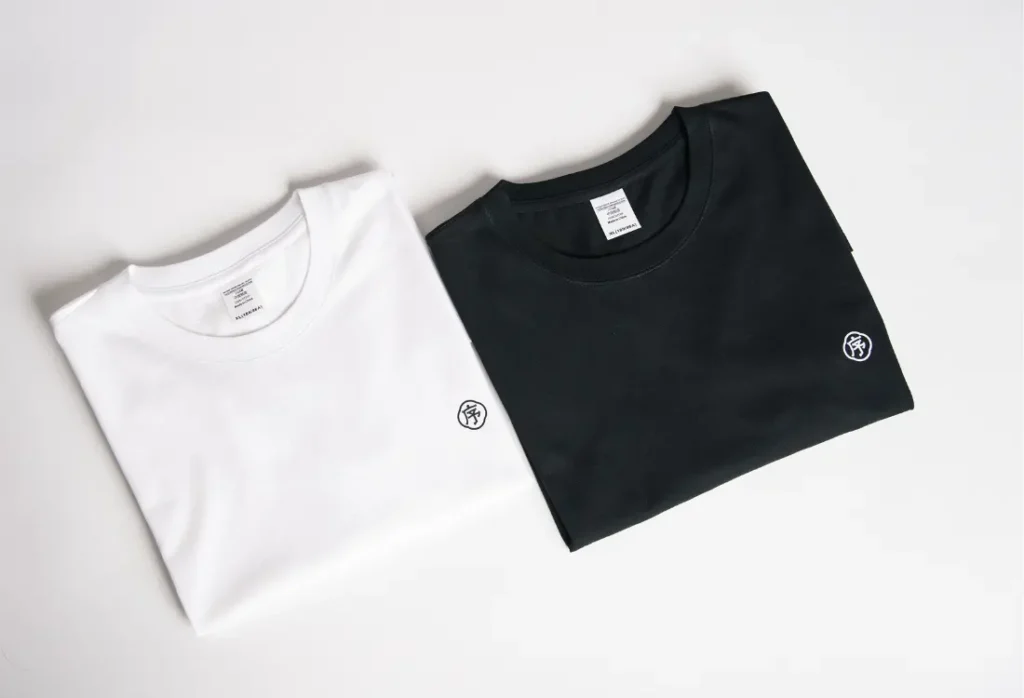
Centre chest: Works well for minimalist streetwear and lifestyle brands using a single embroidered emblem.
The best placement ultimately depends on how you want your brand to be seen and how the garment will be worn. If you’re looking for inspiration, check out our blog “Embroidered Polo Shirts: 8 Brands that Get It Right” to see how embroidery is used by successful clothing brands.
Embroidery or Printing?
People often ask whether embroidery is always better than printing. The answer depends on your artwork.
Embroidery is ideal for logos, initials and simple graphics that benefit from texture and durability. Printing, on the other hand, is usually the better option for photographs, large illustrations and highly detailed artwork.
Many businesses actually combine both methods. A small embroidered chest logo paired with a printed back graphic creates a premium look while giving each decoration method room to do what it does best.
If you’re unsure which option suits your project, head over to our blog “Top Techniques for High Quality Custom Apparel: Screen Printing, Embroidery, and More” to learn about the differences in each technique.We’re also always happy to recommend the most appropriate solution based on your artwork, budget and intended use.
Create Premium Embroidered T-Shirts that Represent Your Brand
Whether you’re ordering uniforms, launching a clothing brand or creating merchandise for your next event, professional embroidery adds a premium finish that lasts.
At ICON Printing, we offer both professional embroidery and custom t shirt printing, helping businesses create premium branded clothing that lasts. If you’re ready to create durable, professional branded clothing, get in touch with our team at sales@iconprinting.com today or Get a Quick Quote online in less than two minutes.
Frequently Asked Questions about Quality Custom Embroidered Shirts and Embroidery
Can you embroider a logo on a shirt?
Yes. Most logos can be embroidered, although very small text and intricate details may need to be simplified for the best result.
How much does it cost to embroider a logo on a shirt?
Pricing depends on factors such as stitch count, logo size, garment type and order quantity. Larger, more detailed logos generally require more stitching and therefore take longer to produce.
How do I convert my logo into embroidery?
Your logo is first digitised into a specialist embroidery file that tells the machine where every stitch should be placed. Vector artwork usually provides the best starting point.
How do I put my own logo on a shirt?
The easiest approach is to provide your logo as high-quality artwork and work with a professional embroidery company. They’ll prepare the embroidery file, recommend the best placement and ensure the finished garment meets your expectations.